


Commercial and industrial cabinets
Evaluate single or multiple cabinets for applications such as managing peak demand or supplying backup power at factories and commercial sites.
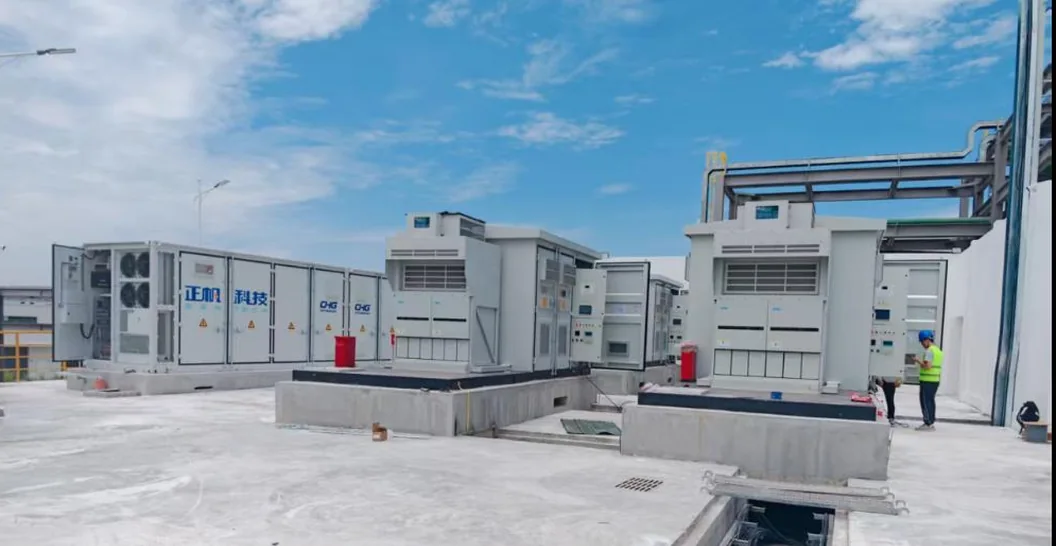
Compare commercial and industrial storage cabinets, container systems, and solar microgrids based on load, power, and discharge duration.
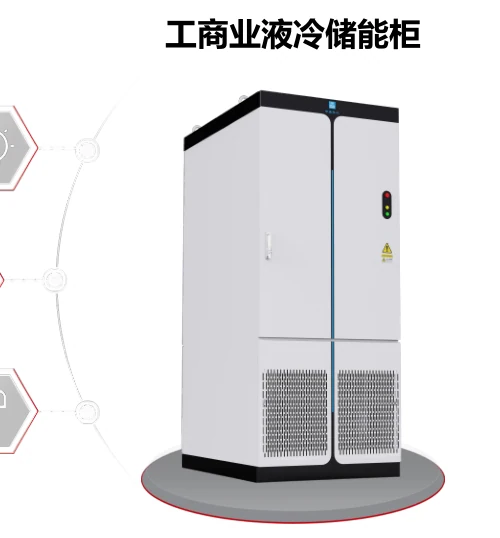
Explore the catalogueOne liquid-cooled commercial storage cabinet in the brochure is rated at 125 kW / 261 kWh. Power and energy capacity are separate parameters. Both should be checked against site loads and the intended discharge duration.
Images and examples are from Zhongkuang Bailian’s new energy materials.
Share how the site will be used, the expected scale, and your timeline so we can discuss suitable options.
Sources include Zhongkuang Bailian’s new energy catalogue and presentation. Targets, tests, certifications, operating figures and cases follow those materials. Consult the project documents for conditions and scope.
Source page 12
The brochure lists 21 grid-connection and type tests, a 25% increase in volumetric energy density, liquid cooling, cluster-level explosion relief and MSD switches, and PERB 2.0 with end-to-end monitoring.
The catalogue lists 21 grid-connection and type tests and refers to CNAS and CMA test documentation. Applications include commercial and industrial storage, smart microgrids, direct green power supply, generation-side and grid-side storage.
The source reports a 25% increase in system volumetric energy density. Protection includes cluster-level explosion relief and an MSD switch, alongside full liquid cooling. PERB 2.0 combines battery behaviour, vehicle information and equipment data for monitoring and automated maintenance from individual components to the system.

Source page 13
The 125 kW / 261 kWh cabinet combines PACK, PCS, BMS, EMS, liquid cooling and fire protection. The catalogue describes 10% less footprint, three levels of protection, parallel expansion and 4G/Ethernet monitoring, and lists CE and target markets.
| Item | Catalogue value |
|---|---|
| Power / energy | 125 kW / 261 kWh |
| Weight | Approx. 2,650 kg |
| Dimensions | 960 × 1,400 × 2,400 mm |
The cabinet integrates PACK, PCS, BMS, EMS, liquid cooling and fire protection and is reported to save 10% of floor area. Safety measures include perfluorohexanone at pack level, aerosol isolation at cabinet level and millisecond BMS monitoring of system parameters.
Factory-prefabricated units use standard connections and can be installed in parallel to expand power and capacity. Cloud monitoring uses 4G and Ethernet. The source lists CE and names the EU, United Arab Emirates, Saudi Arabia, Singapore, Malaysia and Indonesia as target markets.
Source page 14
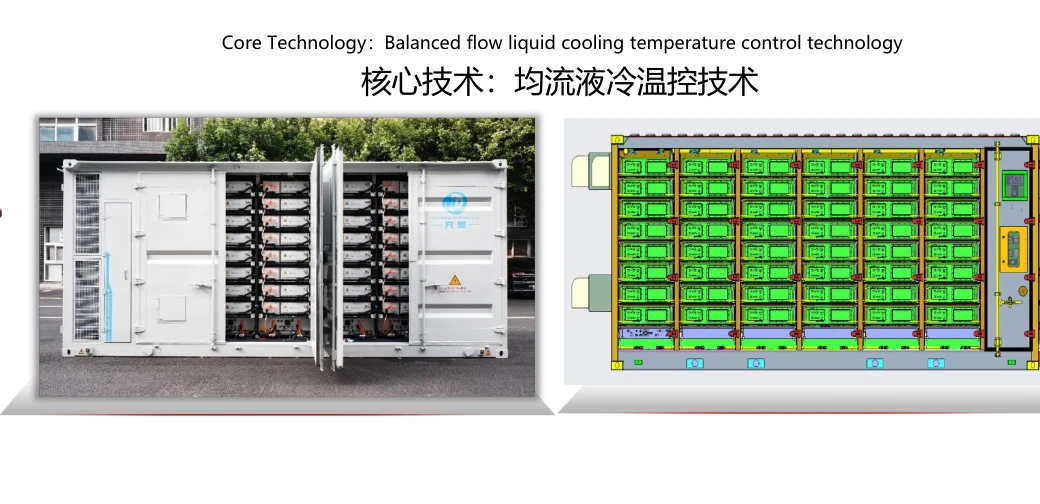
The catalogue describes four levels of thermal management from cell to container, UL 9540A at pack level and a one-hour fire-resistant system design. Balanced-flow liquid cooling and active balancing are used to control temperature differences and improve utilization.
| Item | Catalogue value |
|---|---|
| Rated capacity | >5 MWh |
| String topology | 1P416S × 12 |
| Operating rate P | 0.25 / 0.5 |
| Ingress protection | IP55 |
| Energy throughput gain | 7%+ |
| Cell temperature difference | ≤2 °C |
| System utilization gain | 5% |
Four levels of thermal management cover the cell, pack, cluster and container. The design combines cell barriers, balanced-flow liquid cooling and AI temperature control with per-cluster management and active balancing. The catalogue refers to UL 9540A at pack level and to one hour of system fire resistance and heat isolation.
Source page 15
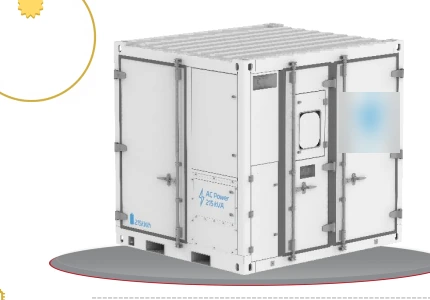
The mobile solar, storage and diesel hybrid serves heavy construction loads, supports up to eight parallel units, transfers between grid and island modes in under 20 ms and offers more than three times momentary overload capability.
| Item | Source value |
|---|---|
| Parallel units | 8 |
| Grid to island transfer | <20 ms |
| Momentary overload | >3× |
| Operating temperature | −20–50 °C |
| Ingress protection | IP55 |
The system targets heavy start-up loads such as tower cranes, crushers and air compressors. Parallel units can reach megawatt-scale power. 4G IoT supports round-the-clock unattended operation and remote maintenance, with sound and light, fire, video and SMS alerts.
The catalogue lists a vibration-resistant structure for high-altitude, dusty or oily work sites and optional DC–DC or DC–AC charging modules.
Source page 21
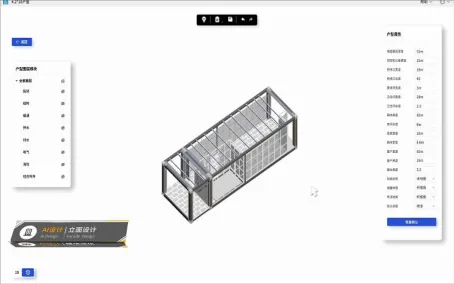
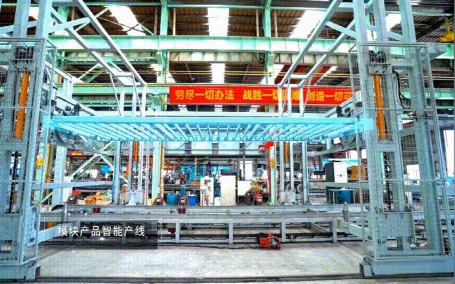
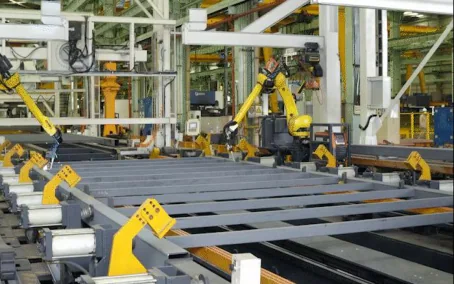
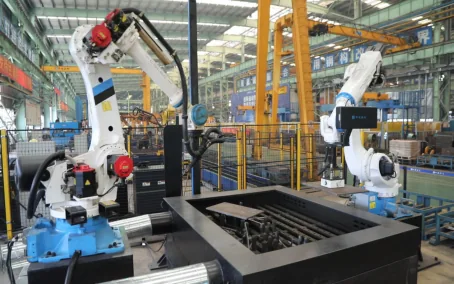
The modular enclosure line lists ±2 mm precision and 40–60 units per day across storage containers, modular enclosures and shipping containers, from design and beveling to welding and assembly.
The line supports containerised storage, modular enclosures and shipping containers. The sequence in the source covers detailed drawings, AI-assisted module detailing, automated turnover and batch welding, beveling with two machines and flexible final assembly.


Source page 42
Home backup and solar, C&I peak shaving and backup, grid-side container systems and park, island or weak-grid solar microgrids are supported by a common product platform, cell/PCS/BMS integration, EMS and remote operations.
The residential range plans wall-mounted and stackable units for backup and solar. For commercial and industrial sites, standard cabinets support peak shaving and backup. Generation-side, grid-side and shared projects are planned around containerised systems and step-up grid-connection equipment.
Solar microgrids coordinate PV, storage, EMS and loads for parks, islands, weak grids and off-grid sites. Standard interfaces, quick deployment, remote monitoring, layered protection and active alerts support delivery and operations.
Source page 43
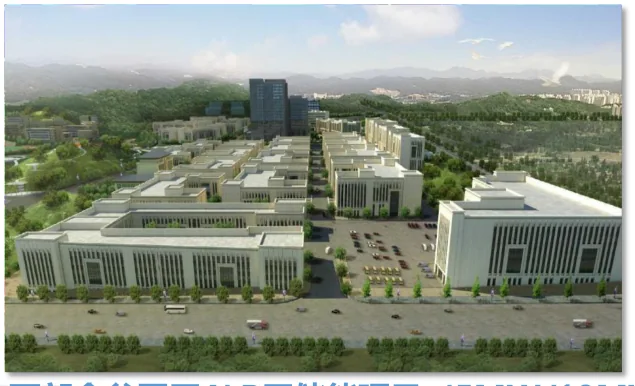
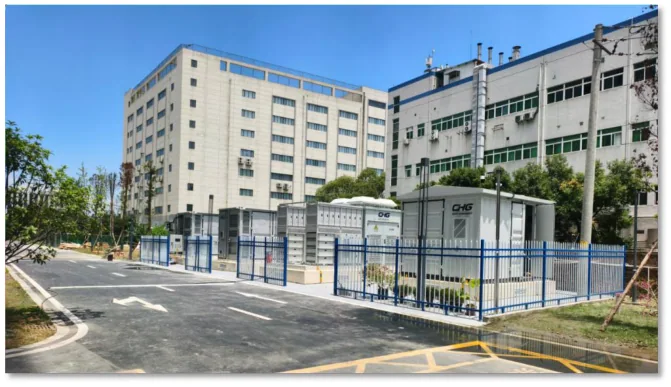
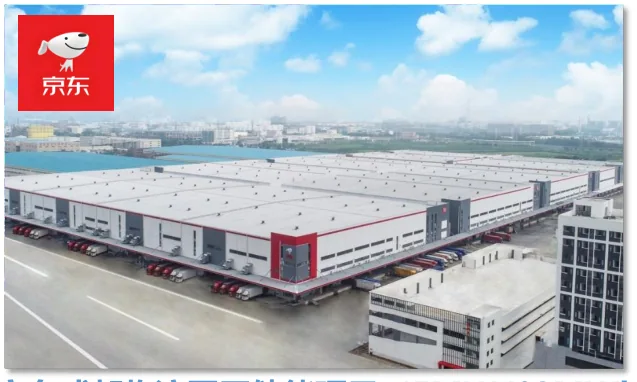
The source shows Chengdu New Hope (5 MW / 10 MWh), Lishui in Zhejiang (10 MW / 20 MWh), Western Food Valley A/B in Chongqing (5 MW / 10 MWh) and JD’s Chengdu logistics park (5 MW / 10 MWh).

用户侧储能案例
成都新希望工商业储能项目(5MW/10MWh)
浙江丽水工商业储能项目(10MW/20MWh)
重庆西部食谷园区A\B区储能项目(5MW/10MWh)
京东成都物流园区储能项目(5MW/10MWh)
Source page 44
The independent storage cases are Shengzhou Development Zone (100 MW / 220 MWh), Tianjin Ziya combined heat and power (300 MW / 600 MWh) and Ulanqab (200 MW / 800 MWh).

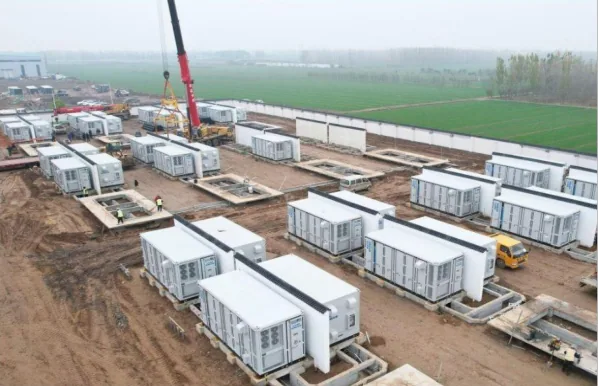

源网侧储能案例
嵊州开发区独立储能项目
总建设规模100MW/220MWh
天津子牙热电联产独立储能项目
总建设规模300MW/600MWh
乌兰察布新型独立储能项目
总建设规模200MW/800MWh
Source page 45
The source lists Hami, Xinjiang (50 MW / 200 MWh) and the Daye wind-solar hydrogen project (50 MW / 100 MWh).

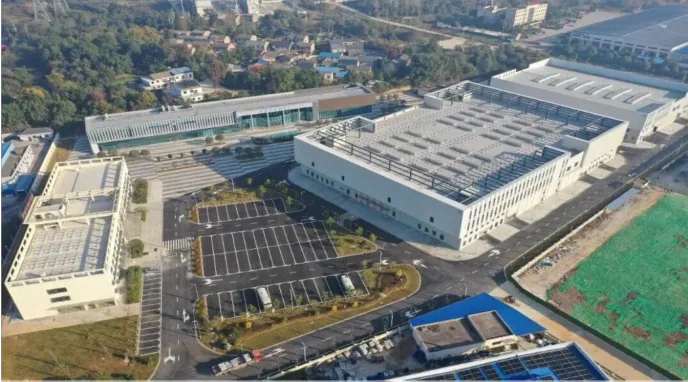
制氢配储储能案例
新疆哈密制氢配储项目(50MW/200MWh)
大冶风光制氢配储项目(50MW/100MWh)
Source page 46
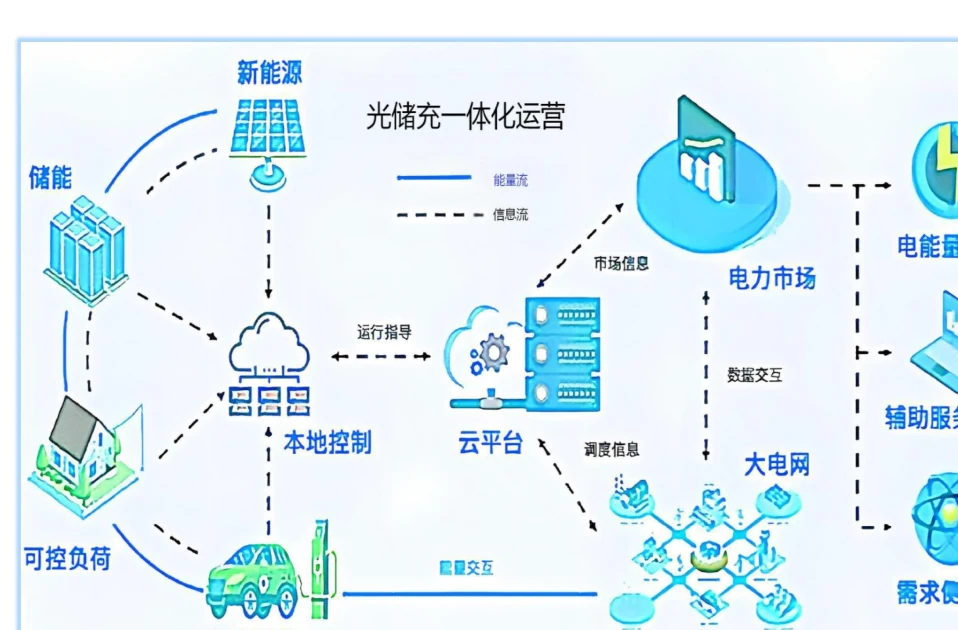
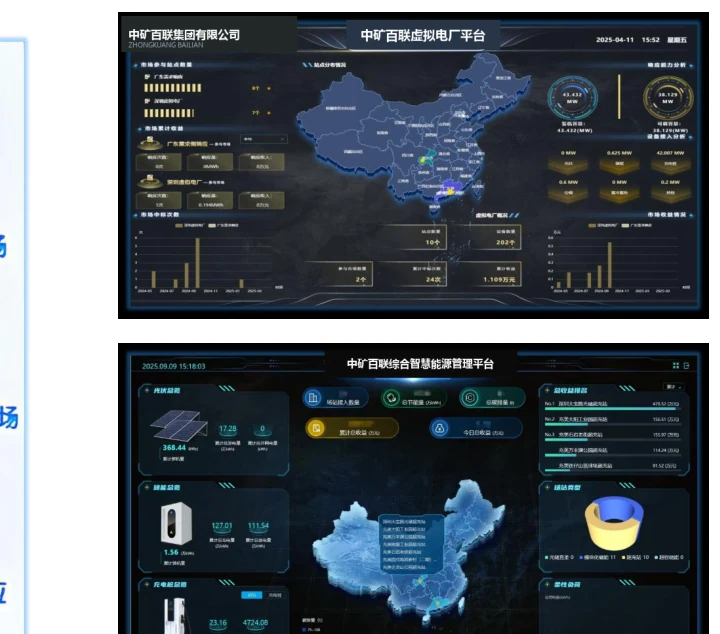
A park microgrid integrates solar, storage and charging with energy management and virtual power plant software to monitor generation, consumption, storage, savings and dispatch.
The park solution combines solar panels, storage and chargers with an EMS and virtual power plant software to manage generation, consumption, storage, savings and dispatch.
Source page 47
The source pairs the Huizhou steel structure manufacturing base with solar-storage-diesel and solar-storage-charging projects at Star Mountain Plaza in Papua New Guinea. The Huizhou figures are reproduced below.
| Item | Scale | Annual generation / savings | Economic benefit |
|---|---|---|---|
| PV | 104,000 m² | 9,882,000 kWh | RMB 4.94m |
| Storage | 1,075 kWh | 478,000 kWh | RMB 280,000 |
| Charging | 720 kW | 1,296,000 kWh | RMB 420,000 |
| Power trading | — | 20,000,000 kWh | RMB 600,000 |
| Total | — | — | RMB 6.24m |

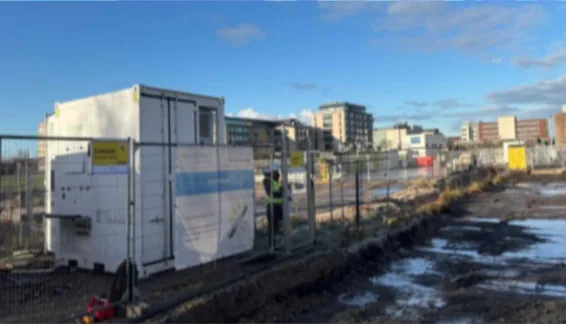
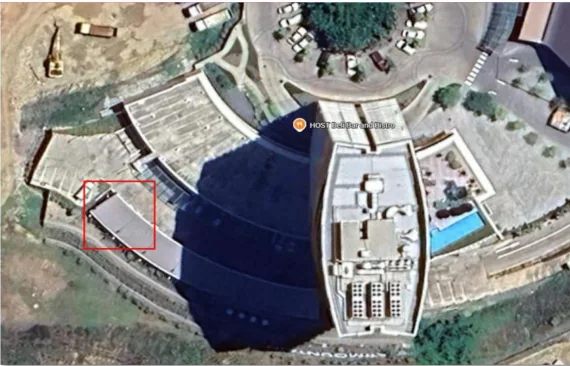
惠州钢构智能制造基地;巴新星山广场光储柴一体化项目;巴新星山广场光储充示范项目。