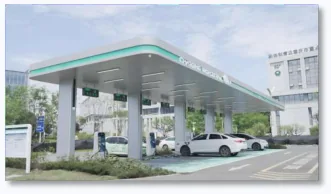
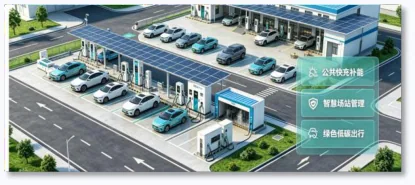
Sources include Zhongkuang Bailian’s new energy catalogue and presentation. Targets, tests, certifications, operating figures and cases follow those materials. Consult the project documents for conditions and scope.
On this page
Source page 2
Charging network targets
The catalogue sets out a “100 cities, 1,000 stations, 10,000 connectors” strategy for China’s 15th Five-Year Plan period and specifies separate targets for 2026 and 2030.
Planned targets
Item
2026
2030
Fast-charging stations
1,000
10,000
Fast-charging connectors
20,000
200,000
Users
5,000,000
50,000,000
Source page 3
Industry ecosystem and partners
The ecosystem spans city parking, mechanical garages, fast charging and storage, integrated investment, construction and operations, coordinated parking and charging, and in-house development and manufacturing.
Smart parking covers citywide parking, mechanical garage equipment and coordinated parking and charging. The energy product range includes intelligent fast chargers and core storage equipment such as battery enclosures and power conversion systems (PCS).
The business combines project partnerships and engineering, procurement, construction and operation (EPC+O) with in-house development and digital manufacturing. The partner network spans components, deployment and operating services.
Partners shown in the catalogue
China Resources
CATL
EVE Energy
Meituan
Neolix
Shenzhen Public Works Bureau
Wuhan Public Transport
DST
Chengdu Eastern New Area
XPeng
BYD
Li Auto
NIO
ComfortDelGro
Baidu
Apollo Go
Pony.ai
Kweichow Moutai
Huawei
JD.com
SF Cold Chain
PetroChina
CNBM
CSCEC
Guangzhou Public Transport
Yuhu Group
SANY
Chongqing Liangjiang New Area
Shenzhen Bus Group
Source page 4
Six-part industrial chain
The catalogue describes five years of development across investment, R&D, design, production, construction and operation, with examples of products, solutions and operating sites.
Source page 16
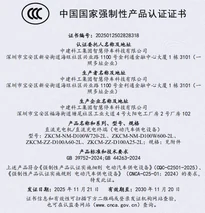
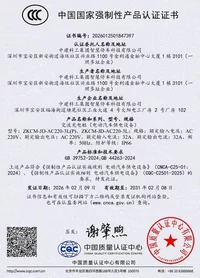
Product certifications and patent references
The source lists grid connection, CCC, CE, CB, automotive-grade and above-standard testing references, as well as invention patents.
The documents below are grouped by the labels used in the source. Use the relevant document and model number to confirm applicability and scope.
Certification, testing and patent documents
Document previews from the source
Grid connection tests
Grid connection tests
Grid connection tests
Grid connection tests
CCC documents
CCC documents
CCC documents
CCC documents
Compliance document in the CE and CB column
Compliance document in the CE and CB column
Automotive quality system documents
Automotive quality system documents
Automotive quality system documents
Laboratory accreditation document
Above-standard tests
Above-standard tests
Invention patents
Invention patents
Invention patents
Invention patents
Source page 17
European certification references
The catalogue shows European certification examples for its charger and storage series and cites EN IEC 61851.
The brochure displays separate charging and storage compliance documents. It cites EN IEC 61851 in the product overview. Refer to the individual documents for the exact model, standard and scope.
European compliance document examples
Document previews from the source
European charging equipment document
European charging equipment document
European storage equipment document
European storage equipment document
Source page 18
Charging equipment performance tests
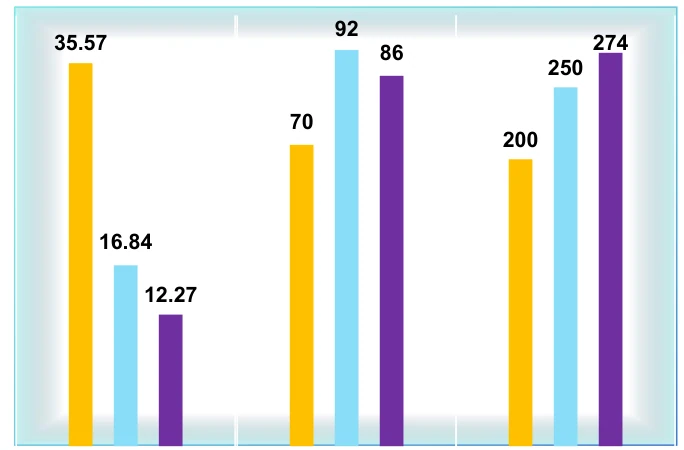
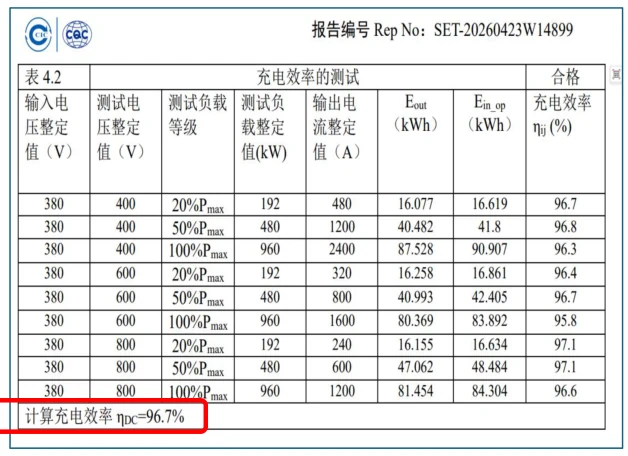
The catalogue cites GRG Metrology and CCIC South laboratory reports for ramp rate, startup and shutdown times, and a 96.7% efficiency test result for a Chongmei charging product.
GRG Metrology comparison figures
Item
Chongmei
Brand A
Brand B
Ramp rate (A/s)
35.57
16.84
12.27
Shutdown time (ms)
70
92
86
Startup time
200
250
274
The comparison cites a GRG Metrology laboratory report. The CCIC South laboratory efficiency table gives 96.7% as the calculated charging efficiency for the tested product. The catalogue describes this as Level 1 under the Chinese national standard.
Source page 19
Charging module and controller development
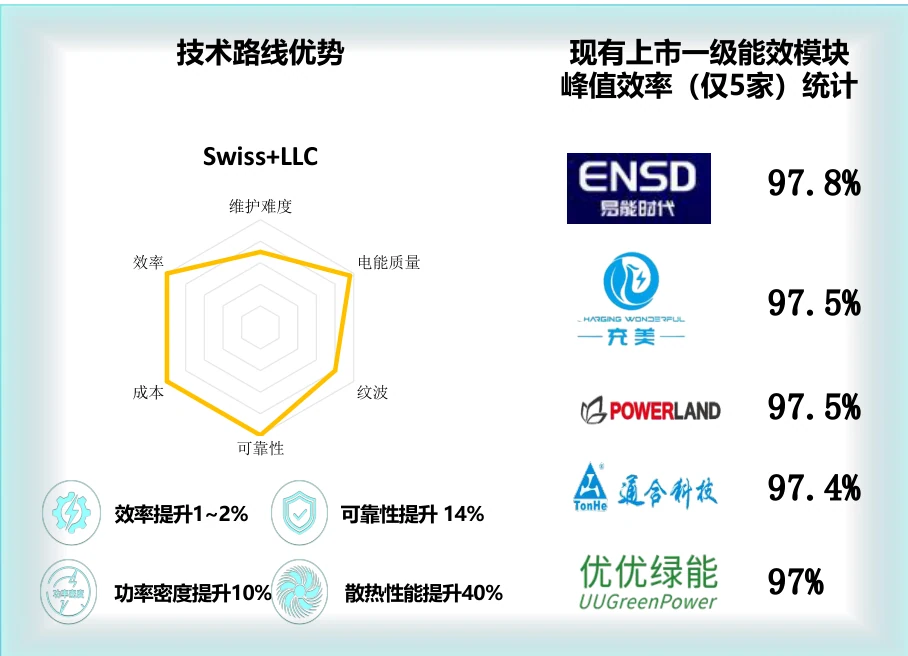
The catalogue reports 97.5% peak efficiency for a Swiss low-frequency rectifier and LLC module, and a controller designed for European, U.S. and Japanese standards.
Peak efficiency of five modules in the source
Brand
Peak efficiency
ENSD
97.8%
Chongmei
97.5%
POWERLAND
97.5%
Tonhe
97.4%
UUGreenPower
97%
For the Swiss rectifier and LLC topology, the source reports 1–2% higher efficiency, 10% higher power density, 14% higher reliability and 40% better heat dissipation. It compares maintenance, power quality, ripple, reliability, cost and efficiency.
The source describes both the charging module and the multi-application charging controller as developed and in production. The table gives the five examples of peak module efficiency that the source lists.
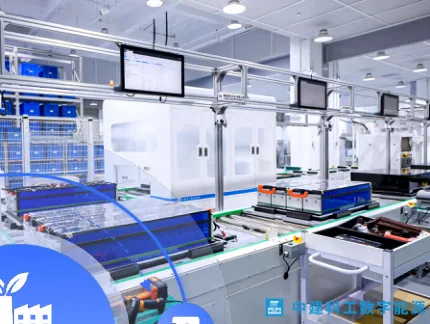
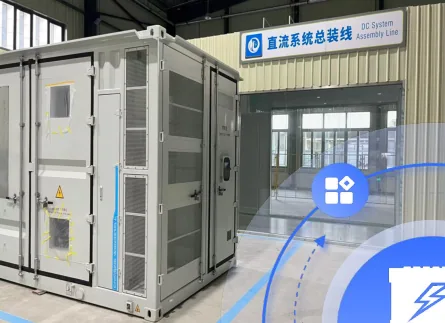
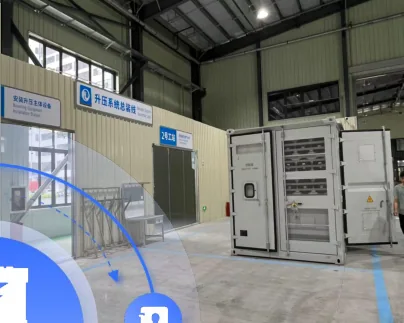
The Bao’an and Huiyang facilities are shown. The catalogue lists capacity of 20,000 charging sets and 6 GWh of storage equipment, a flexible line covering seven product categories and 75% automation versus a cited 40% industry average.
The source identifies Bao’an in Shenzhen and Huiyang in Huizhou as production sites. Its flexible line covers charging, battery swapping, storage and other product categories.
Source page 48
Digital operations and IoT platforms
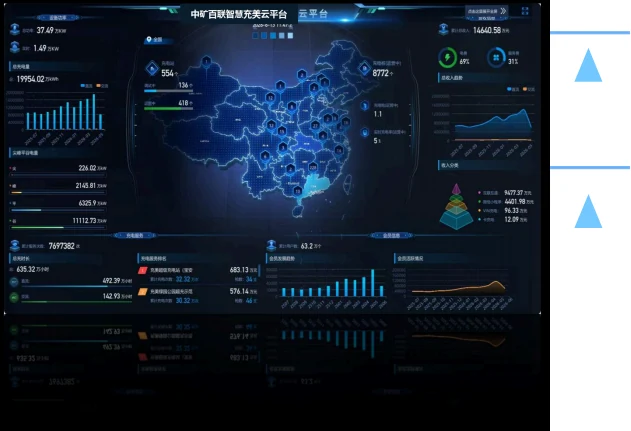
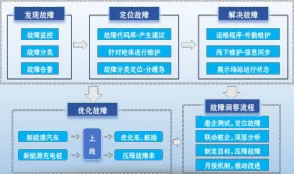
A digital operations platform links parking, energy management, charging and intelligent transport for common access, maintenance, dispatch, data collection and command delivery.
The parking, energy management, charging and intelligent transport platforms provide data and receive dispatch instructions from the central operations platform.
Digital operations platformParking operations platformEnergy management platformCharging operations platformIntelligent transport operations platform
Source page 49
Operating activities and assets
The “2+N” operating model links smart parking and digital energy and extends into charging, battery swapping and storage. The inventory reflects figures in the catalogue.
Operating assets
Item
Catalogue value
Fast-charging stations
450
Battery swapping stations
4
Storage stations
200
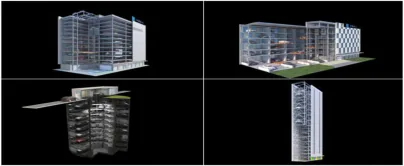
Mechanical garages
10
Curbside parking spaces
50,000
Smart parking operations
Mechanical garageCurbside parking
Transport energy operations
Fast-charging stationBattery swapping stationEnergy storage station
Chinese source text
智慧停车运营包括机械立体车库和路侧停车,交通绿能运营包括超充、换电和储能。
Source page 50
Charging station operations framework
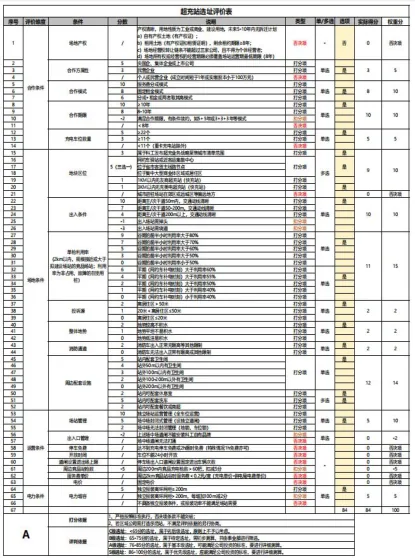
The fifth site-selection model uses Amap and Baidu data. Four standards cover design and acceptance, after-sales and remote monitoring, third-party inspections and safety checks, and a 24/7 customer service rota.
Construction standards cover layout, investment and acceptance checks for fire systems and visual identity. Factories work with a national maintenance network, and a remote operations assistant helps track faults.
Safety measures include third-party site test reports, inspections and emergency plans. The China Unicom customer-service platform supports after-sales workflows and night and holiday cover for 24/7 service.
Source page 51
Charging station services
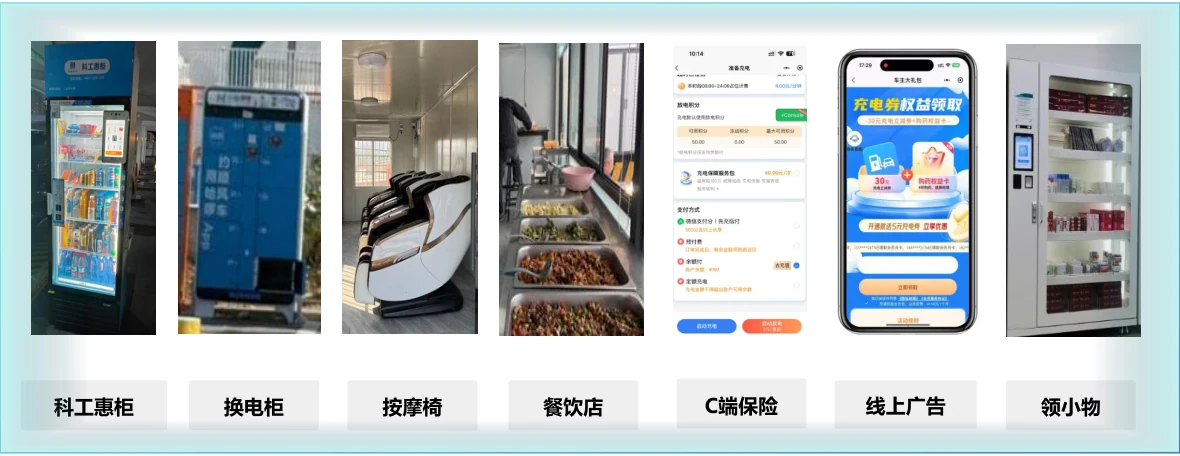
Retail, snacks, ads, lockers, battery swapping, massage chairs, food and consumer insurance appear alongside grid flexibility from aggregated station storage and load.
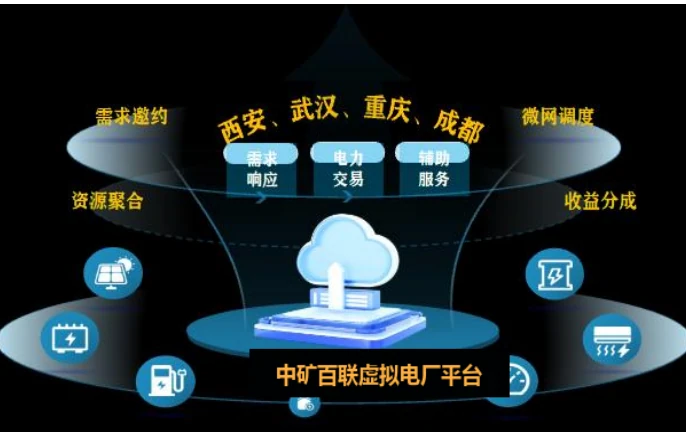
The source lists Kegonghui lockers, battery swapping cabinets, massage chairs, food outlets, consumer insurance, online ads and small-item pickup. It also shows flexibility nodes in Xi’an, Wuhan, Chongqing and Chengdu, with demand requests, resource aggregation, grid dispatch and revenue sharing.
Source page 52
Virtual power plant operations
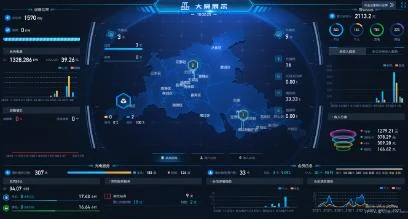
The catalogue lists almost 1,000 connected PV, storage and charging devices at fast-charge sites, commercial buildings and construction storage sites. It reports 156 MW of aggregated resources and 20 MW of adjustable load, with the source’s comparisons to 480,000 kWh per day and 4,000 households.
The source describes the system as one of the group’s first authorised power-coordination platforms. It covers commercial and industrial storage, microgrids, direct green power, generation-side and grid-side applications. The presentation also reproduces part of a 2025 virtual power plant operator recognition list.
2025 virtual power plant operator recognition list, as reproduced in the source
Source page 53
Equipment, engineering, investment and operations
Models include direct equipment and framework sales, EPC and specialized contracting, BOO/BOT, joint equity and development, finance and site leasing, revenue sharing, energy performance contracting (EMC) and delegated or joint operations.
Equipment can be purchased directly or under framework agreements. Construction covers EPC, general construction contracting and specialist contracts. Investment routes include BOO/BOT, equity partnerships, joint investment and construction, finance leases, fixed-rent site leases, revenue sharing and energy performance contracts (EMC).
Operating arrangements include delegated operations, joint operations and support for the partner’s own operations team.
Source page 54
Cooperation strengths and models
The catalogue sets out group resources, an integrated product range, full-cycle services and reference projects, and proposes city partnerships, long-term local operations, flexible investment and equipment models, and cooperation across government and enterprise settings.
The source links group resources, parking, charging and storage products, consulting through post-delivery service, and reference projects under the “100 cities, 1,000 stations, 10,000 connectors” strategy.
City partnerships combine long-term local operations with flexible investment, construction and equipment sales. The source lists urban public sites, cold-chain logistics, industry, highways, mining and public transport, and cooperation with government, state-owned and private organisations.